

What Is the 3-3-3 Rule for Clothes? A 2026 Styling Guide
Table of Contents
- What Is the 3-3-3 Rule for Clothes?
- How the 3-3-3 Method Works in Practice
- Capsule Wardrobe Essentials That Fit the 3-3-3 Framework
- 3-3-3 Method Outfit Ideas for Work, Weekends, and Evenings
- How to Style 9 Pieces of Clothing: A Step-by-Step Guide
- Common Mistakes to Avoid With the 3-3-3 Rule
- The Benefits of Intentional Dressing and Sustainable Style
- Frequently Asked Questions
Last Updated: September 30, 2026
What Is the 3-3-3 Rule for Clothes?
The 3-3-3 rule for clothes is a minimalist styling framework that builds a small, hard-working wardrobe from three tops, three bottoms, and three pairs of shoes. Those nine pieces mix and match into dozens of outfits without a single morning panic. This guide from Essentials By WLJ breaks down how the method works, why it sticks, and how to build your own nine-piece rotation.
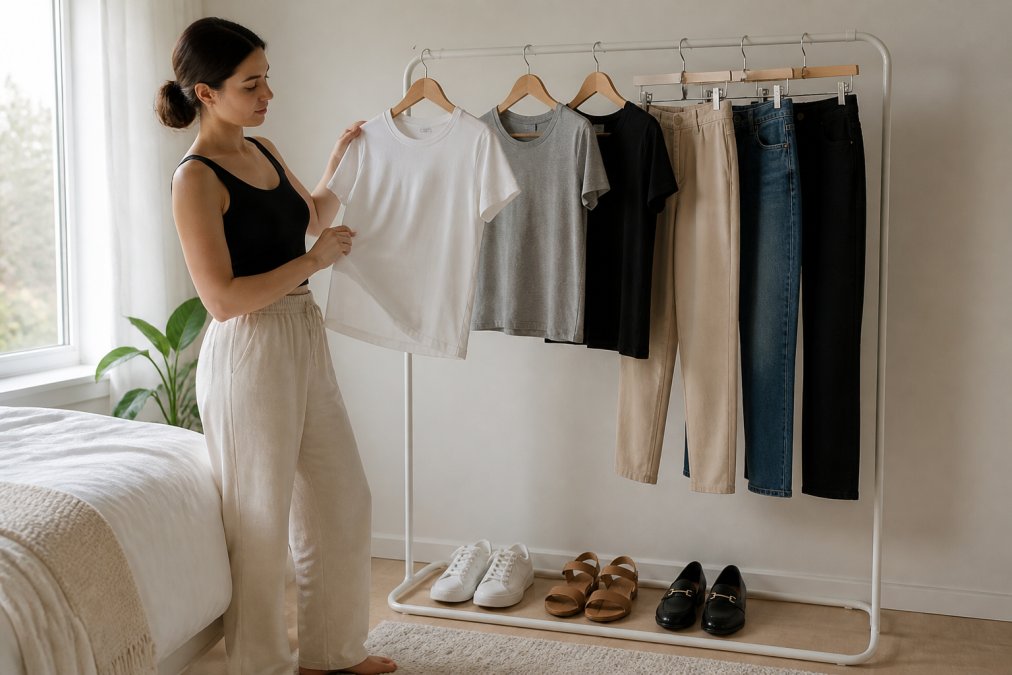
The Origins of the 3-3-3 Styling Challenge
Nobody owns the 3-3-3 rule. It grew out of the capsule wardrobe conversation and spread through styling challenges on social platforms, where creators set themselves a fixed number of pieces for a set period.
How the 3-3-3 Method Works in Practice
The 3-3-3 method works by limiting your rotation to nine core pieces at a time, then swapping them seasonally or monthly rather than buying more. Every piece must pair with every other piece, which is what separates this from simply owning fewer clothes.
Here's the math that makes it work:
- 3 tops x 3 bottoms = 9 base combinations
- Add 3 pairs of shoes = 27 outfit variations
- Layer a jacket or cardigan and the count climbs again
- Swap one top and you reset the whole grid
Capsule Wardrobe Essentials That Fit the 3-3-3 Framework
Capsule wardrobe essentials for this framework are neutral, layerable, and comfortable enough to wear twice a week. But the piece list is the easy part, the real work is the color story. Without a locked palette, nine great pieces produce nine outfits instead of twenty-seven. This is the step most 3-3-3 guides skip, and it's the single biggest reason the method fails in practice.
The Two-Neutral, One-Accent Rule
A palette that reliably multiplies combinations follows a simple ratio: two neutrals plus one accent. Neutrals do the heavy lifting (they match everything); the accent adds personality without breaking coordination.
- Neutral 1 (base): black, navy, charcoal, or camel
- Neutral 2 (secondary): white, cream, grey, or denim blue
- Accent: olive, rust, burgundy, soft blue, or any color you genuinely enjoy
Why This Works: The Color Theory Behind It
Neutrals share low saturation and broad value range, which is why they pair with almost anything. An accent works when it shares either a warm or cool undertone with your neutrals. Mixing a warm accent (rust, camel) with cool neutrals (navy, grey) creates friction that reads as 'off' even when people can't name why. Pick a temperature and stay in it.
Body Type Considerations
Silhouette matters as much as color. A few practical starting points:
- Pear shapes: choose tops with structure or a defined shoulder, and bottoms that skim rather than cling
- Apple shapes: favor straight or slightly A-line bottoms and tops that end at the hip bone
- Rectangle shapes: use layers and belts to create waist definition
- Inverted triangle: balance with wider-leg bottoms and simpler tops
The Essentials List (Within Your Palette)
- Tops: plain tee, button-down, fine-knit sweater, all in Neutral 1 or 2, with one accent option
- Bottoms: straight-leg trousers, dark jeans, tailored shorts or a skirt
- Shoes: white sneakers, loafers or flats, ankle boots
- Layers: one neutral jacket or cardigan that ties the palette together
Stick to two or three colors. Neutrals plus one accent keeps every combination cohesive. This is where most people go wrong first: they buy nine great pieces that clash.
3-3-3 Method Outfit Ideas for Work, Weekends, and Evenings
Outfit ideas for the 3-3-3 method come from combining the same nine pieces three different ways. A plain tee with tailored trousers and loafers reads as office-ready. The same tee with jeans and sneakers works for a weekend errand run.
| Setting | Top | Bottom | Shoes | Layer |
|---|---|---|---|---|
| Work | Button-down | Tailored trousers | Loafers | Blazer |
| Weekend | Plain tee | Dark jeans | Sneakers | None |
| Evening | Fine-knit sweater | Dark jeans | Ankle boots | Cardigan |
How to Style 9 Pieces of Clothing: A Step-by-Step Guide
Styling nine pieces of clothing starts with a wardrobe audit, not a shopping trip. Lay out what you own, keep only what fits and flatters, then build the nine from there. The goal is a set where every top works with every bottom and every shoe, so the math (3 x 3 x 3 = 27) actually delivers.
Step 1: Audit What You Already Own
Pull everything out. Sort into three piles: keep, repair, release. A piece earns 'keep' only if it fits now (not five pounds from now), flatters your shape, and has been worn in the last 12 months. Most people find four to six pieces already fit the framework, you rarely start from zero.
Step 2: Define Your Real Week
List the settings you actually dress for in a typical week. A common pattern is: two to three office days, one to two casual days, one evening out, plus errands and workouts. Your nine pieces must cover the top three settings. If a setting appears less than once a week, it doesn't get a dedicated slot.
Step 3: Lock a Color Palette Before You Pick Pieces
This is the step most guides skip, and it's why so many 3-3-3 attempts collapse. Choose two neutrals and one accent. A workable formula:
- Neutral 1 (base): black, navy, charcoal, or camel
- Neutral 2 (secondary): white, cream, grey, or denim blue
- Accent: one color you actually enjoy, olive, rust, burgundy, or a soft blue
Step 4: Choose Your 3 Tops
Pick three tops that layer over each other and cover different formality levels:
- One everyday tee or fine-knit in Neutral 1 or 2
- One button-down or blouse in Neutral 1 or 2
- One layer-friendly knit or long-sleeve in your accent or Neutral 1
Step 5: Choose Your 3 Bottoms
Bottoms should differ in formality, not just color:
- One tailored trouser or dark denim (most formal)
- One straight-leg or relaxed pant (mid)
- One skirt, short, or second denim cut (casual)
Step 6: Choose Your 3 Pairs of Shoes
Shoes must cover terrain and weather, not just style:
- One clean sneaker (casual, long-walk friendly)
- One flat, loafer, or low heel (polished)
- One boot or weather-ready shoe (seasonal coverage)
Step 7: Run the Grid Test
Before you commit, lay all nine pieces out and physically pair every top with every bottom and every shoe. If any combination looks off, swap the offending piece. This takes 20 minutes and prevents a season of regret.
- Palette locked to two neutrals plus one accent
- Three tops that layer over each other
- Three bottoms in different formality levels
- Three pairs of shoes for different terrain and weather
- Every top tested against every bottom
- Nothing kept that only works with one partner
Step 8: Photograph and Rotate
Once the grid passes, photograph each winning combination. Rotate the nine for 30 days, then reassess. If a piece hasn't been worn twice in that window, it's not earning its slot, swap it out at the next rotation.
Maximizing Outfit Combinations
Maximize outfit combinations by treating accessories and layers as multipliers, not additions to the count. A single belt, scarf, or jacket can shift a look from casual to polished without adding to your nine.
Try these moves:
- Roll sleeves or tuck hems to change a silhouette
- Swap shoes to move an outfit between settings
- Add one layer for warmth and formality at once
- Use color blocking with your accent shade
Common Mistakes to Avoid With the 3-3-3 Rule
The biggest mistake with the 3-3-3 rule is treating it as a shopping list instead of an editing exercise. People buy nine new pieces, ignore what they own, and end up with a closet that's smaller but no more useful.
Watch for these traps:
- Chasing trends over fit. A trendy piece that doesn't suit your shape gets worn once.
- Ignoring the season. Nine summer pieces won't survive October.
- Skipping the palette. Clashing colors kill your combination count.
- Forgetting care. Delicate fabrics that need special washing rarely get worn.
The Benefits of Intentional Dressing and Sustainable Style
Intentional dressing pays off in two ways: it cuts decision fatigue and it cuts waste. A smaller rotation means you wear what you own, which lowers cost per wear and keeps clothes out of landfill.
- Less time deciding what to wear each morning
- Lower spend because you stop buying duplicates
- A cohesive aesthetic that looks deliberate
- Garments that get worn instead of stored
Frequently Asked Questions
What is the 3-3-3 rule for clothes?
The 3-3-3 rule for clothes is a styling framework where you choose three tops, three bottoms, and three pairs of shoes, giving you nine pieces total. Because each top can pair with each bottom, those nine pieces create up to 27 different outfit combinations. It is a simple way to plan a small clothing rotation that covers most everyday outfits without a packed closet.
Is the 3-3-3 rule the same as a capsule wardrobe?
No, but they overlap. A capsule wardrobe is a longer-term collection of curated closet essentials, often 30 to 40 pieces, built for a season or year. The 3-3-3 rule is a short styling challenge: nine items, usually for a week or a trip. Many people use the 3-3-3 rule as a starting point before building a full capsule wardrobe.
How many outfits can you make with the 3-3-3 method?
Nine pieces in the 3-3-3 method produce a maximum of 27 top-and-bottom-and-shoe combinations. That number assumes every top works with every bottom and every pair of shoes. In practice, you may get 15 to 20 outfits you genuinely like, which is still more than enough for a week of everyday outfits, a work trip, or a short holiday.
How do you choose the 9 items for the 3-3-3 challenge?
Start with neutral base layers that mix easily, then add one or two accent colors. Pick three tops (for example, a white tee, a button-down, and a knit), three bottoms (jeans, tailored trousers, and a skirt or shorts), and three pairs of shoes (sneakers, flats or loafers, and a heel or boot). Check that each piece works with at least two others before committing.